

Concerns about environmental pressures associated with food production also affect luxury products. This study investigated for the first time the environmental performance of caviar production, an aquaculture luxury food, using the Life Cycle Assessment (LCA) methodology and scenario analysis. The case study analysed is representative of the Italian caviar production chain and encompasses four different farmed sturgeon species (Huso huso, Acipenser transmontanus, A. gueldenstaedtii, A. baerii).
Organic certification for aquaculture fish prohibits the use of synthetic pigments in feed but allows natural alternatives. Meal derived from the alien red swamp crayfish (Procambarus clarkii) is rich in astaxanthin, a powerful natural antioxidant. This study aims to evaluate the effects of a 12 % dietary inclusion of crayfish meal on the shelf-life and nutritional quality of farmed gilthead seabream (Sparus aurata).
Different strategies have been proposed to boost the resistance of fish against Aeromonas salmonicida, one of the major pathogens of salmonids. This study conceived an integrated approach to evaluate the immunomodulatory effects of two commercial feeds (Protec and Optiline, Skretting) on rainbow trout during an Aeromonas salmonicida outbreak that caused high mortality in a fish farm. Welfare indicators, biometric, autoptic, and haematology indices, and innate immunity parameters (leukocyte viability, reactive oxygen species (ROS) production, and phagocytosis) were evaluated in fish fed with either Protec (containing β-glucans, vitamin C, E, and zinc) or a control diet (Optiline).
Sea cucumbers, important members of the phylum Echinodermata, play a crucial role in sediment mixing and nutrient cycling on the seafloor. They also hold significant economic value, particularly in Asian food and pharmaceutical markets. In the Mediterranean Sea, the harvesting of sea cucumbers has recently intensified, often without regulation, threatening both species populations and the health of benthic ecosystems. This study investigated the potential of using fatty acid (FA) profiles as ecological biomarkers to trace the different origin and feeding ecology of two sea cucumber species, Holothuria polii and H. tubulosa, collected from ten coastal sites in Italy.
This work applies the Life Cycle Assessment methodology to two case studies: a production chain based on wild seed, and, for the first time, a production chain based exclusively on seed produced in hatcheries, to assess the environmental impacts of the actual production chains (conventional-wild seed and hatchery-based) of Manila clam (Ruditapes philippinarum) from aquaculture, to identify the hotspots and possible mitigation strategies.
The house cricket (Acheta domesticus) is considered one of the most promising farmed insect to be used as novel food, thanks to its attractive nutritional profile and its great taste. To the best of our knowledge, crickets in Europe are reared on soybean meal-rich feed which won’t be sustainable in the long run. Insect producers have shown interest in using more environmentally friendly substrates for cricket’s rearing. Among these, seaweed has been investigated as feed ingredients for insect rearing.
AWARD
AMBIENTE FUTURO “Youth4Future”
2023
“PESCA E ACQUACOLTURA SOSTENIBILI: DALLA GOVERNANCE ALLA FILIERA”
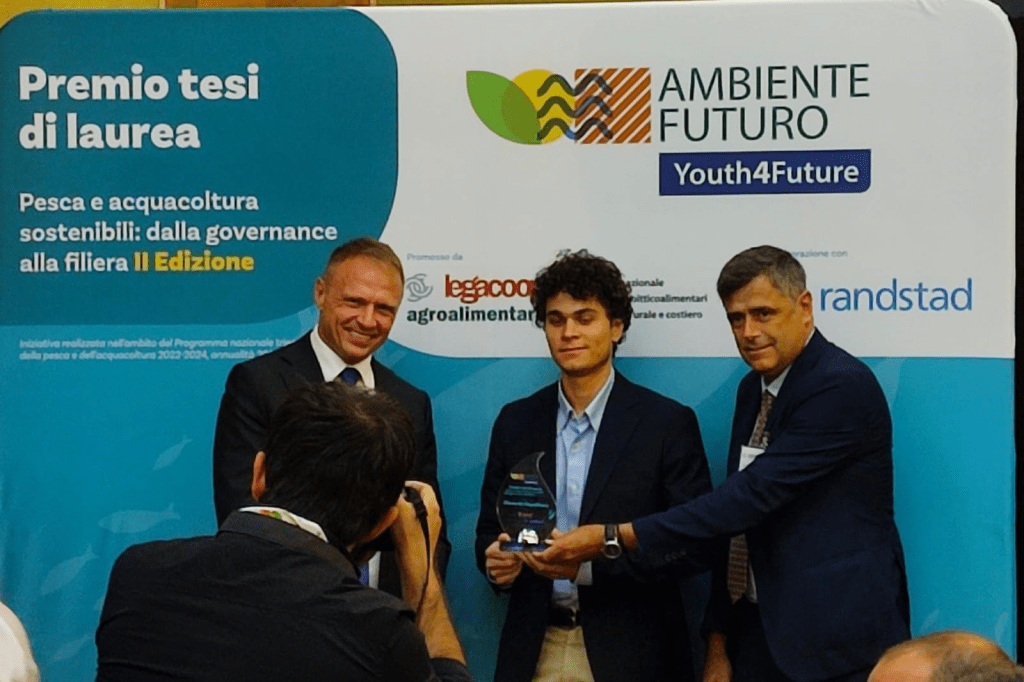
Il Dott. Riccardo Napolitano, assegnista presso la sede di Monterotondo del Centro Zootecnia e Acquacoltura, si è distinto per la sua tesi di Laurea dal titolo “Individuazione di aree marine idonee per la mitilicoltura: bilancio ambientale di azoto e fosforo e capacità produttiva di un’area di studio nelle aree marino costiere laziali” nel contest ideato e sostenuto da Legacoop Agroalimentare e Randstad, seconda edizione.
Over the last decades, harmful dinoflagellate (Dinophysis spp.) blooms have increased in frequency, duration, and severity in the Mediterranean Sea. Farmed bivalves, by ingesting large amounts of phytoplankton, can become unsafe for human consumption due to the bioaccumulation of okadaic acid (OA), causing Diarrhetic Shellfish Poisoning (DSP). Whenever the OA concentration in shellfish farmed in a specific area exceeds the established legal limit (160 μg·kg−1 of OA equivalents), harvesting activities are compulsorily suspended. This study aimed at developing a machine learning (ML) predictive model for OA bioaccumulation in Mediterranean mussels (Mytilus galloprovincialis) farmed in the coastal area off the Po River Delta (Veneto, Italy), based on oceanographic data measured through remote sensing and data deriving from the monitoring activities performed by official veterinarian authorities to verify the bioaccumulation of OA in the shellfish production sites.
In this study, 144 red swamp crayfish (Procambarus clarkii, initial mean weight 3.9 ± 0.3 g) juveniles were fed diets containing graded levels of purslane (Portulaca oleracea), with a decreasing percentage of proteins (from 17.3% to 1.0%) for 10 weeks. Six diets were administered: four fishmeal diets containing 5%, 15%, 25%, and 50% purslane, a diet with 100% purslane, and a commercial diet. Growth performance and the amounts of fatty acids and carotenoids were measured.
This study highlights that the environmental burden associated with seed production could be reduced by switching to alternative technologies to meet energy needs, such as investments in photovoltaic and wind energy production systems.
The present paper aimed at comparing electrical stunning (ES) and cold shock (ICE) in Salmo carpio, an Italian endemic under-investigated species. Rigor mortis evolution, fillet adenosine 5′-triphosphate (ATP), shape, colour, pH and water holding capacity were assessed by integrating chemical and image analyses.
AWARD
AquaFarm 2022 R&D contest
“An affordable and easy-to-use tool for automatic fish length and weight estimation in a mariculture cage (AI FISH)”
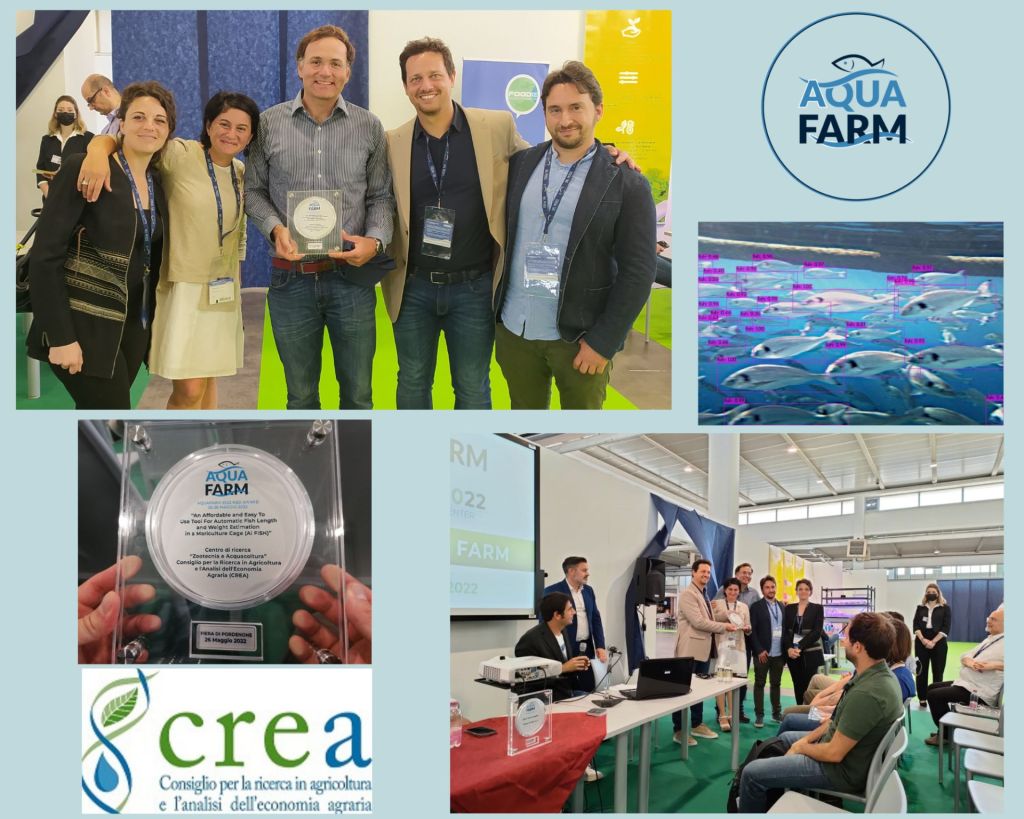
2022 – An affordable and easy‑to‑use tool for automatic fish length and weight estimation in mariculture
In this study, we explore a promising way to take fish measurements in a non-invasive approach through computer vision.
Images captured by a stereoscopic camera are used by Artificial Intelligence algorithms in conjunction with computer vision to automatically obtain an accurate estimation of the characteristics of fish, such as body length and weight.
2022 – Environmental performance and shell formation-related carbon flows for mussel farming systems
This study examined the environmental performance of mussel (Mytilus galloprovincialis) farming in the view of reduction of greenhouse gas emissions, through the Life Cycle Assessment (LCA) methodology.
2021 – ATLANTE DELLE BUONE PRATICHE
FILIERE SOSTENIBILI DELLA PESCA E DELL’ACQUACOLTURA
2021 – Valore nutritivo e sicurezza alimentare di ingredienti innovativi o sotto-utilizzati di interesse per l’acquacoltura
A 10-week feeding trial was carried out to emphasize the effects of purslane weed (Portulaca oleracea) whole diet on pigmentation and fatty acids profile of juvenile freshwater red swamp crayfish Procambarus clarkii.
Procambarus clarkii is a native species of Central America, but strongly invasive in many
regions of the world. An investigation on the red swamp crayfish was carried out to obtain more information about its population dynamics in the Tiber River, in Central Italy.
The pattern of yellowish pigmentation of the skin was assessed in gilthead seabream (Sparus aurata) fed for 12 weeks iso-proteic (45%) and iso-lipidic (20%) diets deprived of fish meal and containing either a blend of vegetable protein-rich ingredients or where graded levels of the vegetable protein blend were replaced by insect (Hermetia illucens—10%, 20% or 40%) pupae meal, poultry by-product meal (20%, 30% or 40%), red swamp crayfish meal (10%) and marine microalgae (Tisochrysis lutea and Tetraselmis suecica—10%) dried biomass.
European consumers prefer wild over farmed aquatic food and consider it healthier and tastier. Consumers are increasingly paying attention to sustainability and welfare of farmed fish. Such expectations might be met by organic certification, but this represents a cost for the producer. It is crucial to know consumer habits about farmed aquatic food consumption and willingness to pay for certification.
The present study aims a comprehensive description of the Italian organic aquaculture sector, within the national aquaculture framework, in terms of production units and volumes during the four years period 2015-2018. This survey allowed to collect results about species produced and farm number and distribution at regional level.
2018 – Il consumo di pesce allevato e biologico in Italia
Il consumo di pesce allevato e biologico in Italia
A method for fish monitoring by high-frequency acoustic camera, coupled with an automated method for counting fish, was implemented that allowed to analyze very large amounts of data with reduced costs. The acoustic camera was mounted in the tidal channel of the Caprolace lagoon (central Italy) and programmed for 12 h. continuous recording at night time, between October 2016 and February 2017, for a total of 413 h, that were automatically processed by a specific software routine.
2017 – Acquacoltura Biologica
Acquacoltura Biologica: Opportunità e debolezze del settore
The majority of organic marine fish farms currently begin the production cycle with nonorganic juveniles from conventional hatcheries, permitted by the European Regulation on organic fish origin (EC 710/2009) until the end of 2016. Wild juvenile gilthead seabream (Sparus aurata) from coastal lagoons and hatcheries were experimentally reared under organic conditions, in order (1) to investigate differences in fillet lipid content and fatty acids composition, and (2) to propose a possible future source of juveniles destined for organic aquaculture.

 Acquacoltura